
In industrial operations and large-scale facilities, maintaining optimal temperature is crucial for efficiency, safety, and equipment longevity. A closed loop cooling system is an advanced solution that recirculates cooling fluid instead of discharging it as waste, offering numerous benefits including energy savings and environmental sustainability. This article explores the characteristics, advantages, components, and applications of closed loop cooling systems.
What is a Closed Loop Cooling System?
A closed loop cooling system is a type of heat exchange system where coolant is circulated through a network of pipes, cooling equipment or processes without direct exposure to the environment. Instead of drawing water from an external source for cooling, the system recycles the same coolant, minimizing water consumption and reducing thermal load on local water bodies.
Key Characteristics of Closed Loop Cooling Systems
- Recycling of Coolant: The system uses a continuous cycle to cool machinery or processes, recirculating the coolant multiple times.
- Temperature Control: Closed loop systems offer precise temperature control, which can be critical for sensitive processes.
- Minimized Water Usage: These systems reduce the need for make-up water, leading to significant conservation of water resources.
- Reduced Environmental Impact: By eliminating the discharge of heated water into the environment, closed loop systems help maintain local aquatic ecosystems.
Benefits of Closed Loop Cooling Systems
- Energy Efficiency: Closed loop systems often require less energy to operate because they minimize the energy needed to treat incoming water and manage discharges.
- Cost Savings: By reducing the need for external water resources and waste management, operational costs decrease significantly over time.
- Improved Reliability: With less dependence on external sources for cooling, closed loop systems provide more reliable performance and reduce downtime.
- Enhanced Equipment Lifespan: Cooling systems that maintain optimal temperatures can reduce wear and tear on machinery, extending its operational life.
- Reduced Chemical Usage: Many closed loop systems incorporate chemical treatments for the coolant, leading to lower overall chemical demands and reduced environmental impact.
Components of a Closed Loop Cooling System
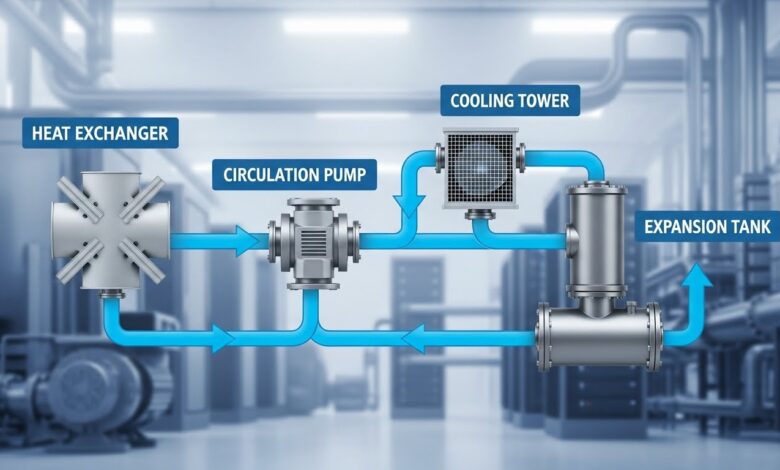
- Heat Exchanger: Transfers heat from the process or equipment to the coolant. It’s essential for maintaining the desired temperature.
- Cooling Tower (if applicable): Some closed loop systems use a cooling tower for additional cooling of the recirculated fluid, although in completely closed systems, cooling towers may not be necessary.
- Circulation Pump: Moves the coolant through the system, ensuring adequate flow and heat exchange.
- Expansion Tank: Accommodates coolant expansion and contraction, maintaining system pressure.
- Control System: Monitors temperatures, flow rates, and other operational parameters, automatically adjusting the system as needed for optimal performance.
Applications of Closed Loop Cooling Systems
- Industrial Manufacturing: Closed loop systems are widely used to cool equipment such as CNC machines and injection molding machines, ensuring consistent operational temperatures.
- Data Centers: These systems maintain optimal temperatures for servers and electronic equipment, preventing overheating and system failures.
- HVAC Systems: In large commercial buildings, closed loop systems can efficiently manage cooling for heating, ventilation, and air conditioning.
- Power Generation: Power plants use closed loop cooling systems to dissipate heat generated during electricity production.
- Chemical Processing: Closed loop systems are essential for maintaining specific temperature conditions in chemical reactors and other processing equipment.
Best Practices for Implementing a Closed Loop Cooling System
- Regular Maintenance: Ensure that pumps, heat exchangers, and other components are regularly inspected and maintained to prevent breakdowns.
- Monitor Performance: Utilize sensors and automated controls to monitor key performance indicators, such as flow rates and temperatures.
- Fluid Quality Management: Regularly check and treat coolant to prevent scaling, corrosion, and microbial growth, which could affect system efficiency.
- System Design Optimization: Work with engineers to design a closed loop system that meets the specific cooling needs of your operation while minimizing energy usage.
- Energy Audits: Conduct regular energy audits to assess the efficiency of the cooling system and identify areas for improvement.
Conclusion
Closed loop cooling systems represent a modern approach to temperature management in various industrial applications. By recycling coolant and effectively managing heat, these systems contribute to energy efficiency, cost savings, and environmental sustainability. As industries increasingly focus on resource conservation and optimized operations, closed loop cooling systems are becoming a vital solution for a sustainable future.