
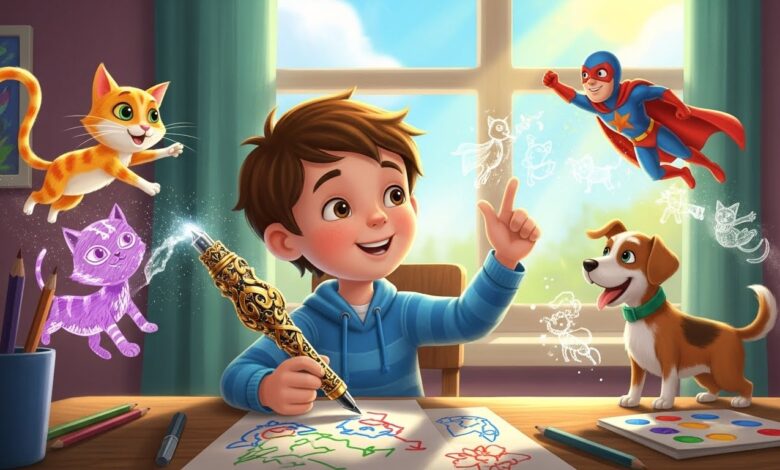
In a world increasingly reliant on technology, the charm of traditional writing instruments remains strong. “Ryan’s Rescue Pen” tells the heartwarming story of a young boy’s adventure that centers around a magical pen, blending imagination, creativity, and the importance of practical problem-solving. This article explores the themes, characters, and life lessons captured in this delightful narrative.
Overview of “Ryan’s Rescue Pen”
“Ryan’s Rescue Pen” follows the journey of a young boy named Ryan who discovers a unique pen that seems to possess magical properties. With the ability to bring his drawings to life, Ryan navigates the challenges of childhood while learning valuable lessons along the way. The story emphasizes creativity’s role in problem-solving and the power of imagination.
Plot Summary
Ryan is an imaginative child who often finds himself lost in his daydreams. He loves to draw and create stories but sometimes struggles to express himself verbally. One day, while rummaging through his grandfather’s old belongings, he stumbles upon a beautifully ornate pen, adorned with intricate designs and a vibrant color palette.
The Magical Discovery
As Ryan begins to draw with his newfound pen, he discovers that what he puts on paper comes to life! Whether it’s a fluffy dog, a magical treasure chest, or a superhero, the possibilities seem endless. Initially overwhelmed with excitement, Ryan quickly learns that this power is not just about fun and games.
The Rescue Adventure
One day, as Ryan is sketching a peaceful park scene, he overhears his friends in trouble—a neighborhood cat is stuck high up in a tree! Inspired to help, Ryan decides to draw a heroic cat rescuer. However, he learns that simply creating something isn’t enough; he must also take action.
Ryan harnesses his pen’s magic to create a rescue plan. By drawing a ladder and the tools necessary to help the cat, he enlists the help of his friends to make the rescue happen. Through collaboration, they successfully rescue the cat, teaching Ryan that teamwork is crucial in real-life scenarios.
Themes Explored
- Imagination and Creativity: The story powerfully illustrates the importance of imagination in childhood. Ryan’s journey emphasizes how creativity can serve as a tool for problem-solving.
- Responsibility: With great power comes great responsibility. Ryan learns that using his magical pen requires thoughtful consideration, as he must balance fun with the potential consequences of his actions.
- Teamwork and Friendship: The adventures Ryan undertakes with his friends highlight the importance of collaboration and support. His experiences reinforce the idea that working together can lead to achieving common goals.
- Courage and Empathy: Ryan’s willingness to help his friends shows the importance of being compassionate and brave in difficult situations, ultimately helping those in need.
Character Development
Ryan, the protagonist, undergoes significant growth throughout the story. Initially more of a dreamer than a doer, he learns to balance his creativity with practicality. His character demonstrates how action, paired with imagination, leads to positive outcomes.
Ryan’s Friends play a crucial role in the narrative as well. They represent the camaraderie and support system that children rely on. Their interactions with Ryan convey lessons on collaboration, empathy, and the joy of working as a team.
Illustrative Style
The illustrations in “Ryan’s Rescue Pen” are vibrant and engaging, capturing the whimsy and magic of Ryan’s adventures. Each page immerses the reader in a colorful world, reflecting Ryan’s imagination and the enchanting effects of his pen. The illustrations also serve to visually reinforce the lessons learned throughout the story.
Conclusion and Lessons Learned
“Ryan’s Rescue Pen” is a beautifully crafted tale that delights readers while imparting valuable life lessons. Through Ryan’s adventures, young readers are encouraged to embrace their creativity, understand the importance of responsibility, and recognize the value of teamwork.
This enchanting story reminds us that imagination can be a powerful tool—not just for making fantastical things come to life but also for navigating the real-world challenges that arise in childhood and beyond. With its heartwarming message and captivating illustrations, “Ryan’s Rescue Pen” serves as an inspiring read for children and parents alike.