
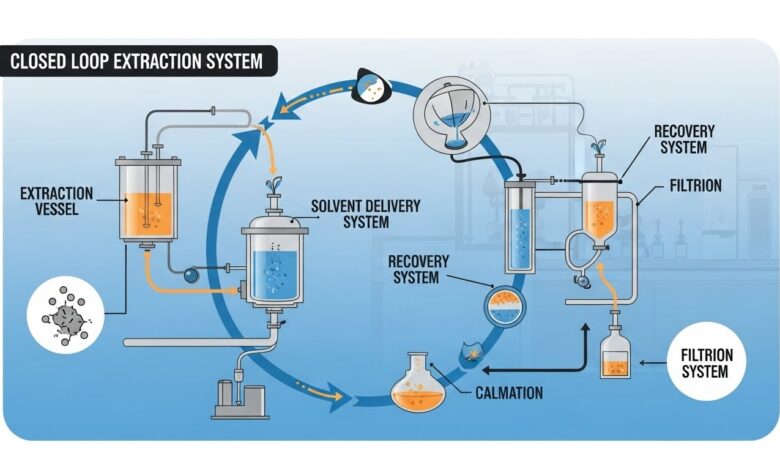
In various industries, the need for efficient and sustainable extraction methods has led to the development of advanced systems that minimize waste and maximize productivity. One such innovation is the closed loop extraction system. This article provides an in-depth overview of what closed loop extraction systems are, their advantages, components, applications, and best practices for implementation.
What is a Closed Loop Extraction System?
A closed loop extraction system is a method used to extract essential components—such as oils, fragrances, or other active ingredients—while minimizing waste and environmental impact. The closed loop design means that solvents or other extraction agents are reused within the system, creating a continuous model that reduces the need for additional resources. This approach is commonly used in industries like cannabis extraction, food processing, herbal medicine, and essential oil production.
How It Works
The closed loop extraction process typically involves the following steps:
- Solvent Delivery: Solvents are introduced into the extraction vessel, where the plant material or substance to be extracted is placed. The solvents dissolve the essential components.
- Extraction: The mixture of solvent and extracted materials is left to sit for a specific time, allowing complete extraction of desired compounds.
- Separation: After extraction, the solution is processed to separate the solvent from the extracted material. This is often achieved through techniques like distillation or filtration.
- Solvent Recovery: The solvent is then condensed and collected back into the system for reuse.
- Repeat Cycle: The closed loop process allows for multiple extraction cycles, leading to higher yield efficiency and reduced waste.
Advantages of Closed Loop Extraction Systems
1. Environmental Sustainability
One of the standout benefits of closed loop extraction systems is their environmental impact. By recycling solvents, these systems significantly reduce waste and minimize the need for new materials. This approach conserves natural resources and decreases the ecological footprint.
2. Cost-Effectiveness
While the initial investment in a closed loop extraction system can be higher, the long-term savings are substantial. By reusing solvents and minimizing waste, operating costs decrease, making it a financially viable option over time.
3. Enhanced Safety
Traditional extraction methods can involve hazardous materials and processes that pose risks to both operators and the environment. Closed loop systems are designed to be safer, as they minimize exposure to toxic solvents and reduce the likelihood of accidents associated with open systems.
4. Improved Quality of Extracts
Closed loop systems can offer better control over the extraction process, resulting in higher quality extracts. By minimizing contamination and optimizing conditions for extraction, these systems can produce more potent and purer products.
5. Efficiency and Yield
The ability to recycle solvents and materials within the system allows for increased extraction efficiency. Closed loop systems can deliver higher yields with reduced time and resource usage, making them ideal for high-demand applications.
Key Components of a Closed Loop Extraction System
To effectively operate a closed loop extraction system, several key components are required:
1. Extraction Vessel
The extraction vessel is where the initial extraction takes place. This vessel can vary in size and design depending on the scale of the operation and the specific materials being processed. It must be constructed from materials that can withstand the solvents involved and allow for easy cleaning.
2. Solvent Delivery System
This includes pumps and lines that transport the solvent into the extraction vessel. The solvent delivery system must be capable of handling the pressures and temperatures needed for effective extraction.
3. Recovery System
The recovery system is crucial to the efficiency of a closed loop system. It typically involves condensers and separators that allow for the safe collection and recycling of solvents once the extraction process is complete.
4. Filtration System
To ensure the purity of the final extract, a filtration system is often used to separate any solid particles from the liquid solvent after extraction.
5. Control Systems
Advanced closed loop systems often incorporate automation and control technology to monitor parameters such as pressure, temperature, and flow rates. This helps maintain optimal conditions for extraction and enhances overall safety.
Applications of Closed Loop Extraction Systems
Closed loop extraction systems have a diverse range of applications across multiple industries:
1. Cannabis Extraction
In the cannabis industry, closed loop extraction systems are employed to extract cannabinoids and terpenes efficiently. These systems use solvents like ethanol or CO2 to extract potent oils from cannabis plants, often resulting in highly concentrated products suitable for edibles, oils, and tinctures.
2. Essential Oil Production
The fragrance industry uses closed loop systems for extracting essential oils from botanical sources. These systems ensure that the delicate compounds are preserved throughout the extraction process, producing high-quality essential oils for use in perfumes, aromatherapy, and cosmetics.
3. Food and Beverage Industry
Closed loop extraction systems are utilized in extracting flavors, colors, and functional ingredients from natural sources in the food industry. For example, closed loop systems can help in creating natural food additives while minimizing waste and maximizing yield.
4. Pharmaceutical Manufacturing
In the pharmaceutical sector, closed loop systems are critical for extracting active pharmaceutical ingredients (APIs) from plant material or other sources. The precise control offered by closed loop systems can enhance the consistency and quality of drug formulations.
Best Practices for Implementing a Closed Loop Extraction System
1. Choose the Right Solvent
Selecting the appropriate solvent is crucial for an effective closed loop extraction process. Consider factors such as extraction efficiency, safety, and regulatory compliance.
2. Optimize Parameters
Regularly monitor and optimize parameters like temperature, pressure, and extraction time to enhance yield and quality. Each material has unique characteristics that may require adjustments in the extraction process.
3. Ensure System Maintenance
Routine maintenance is essential for keeping the system operating efficiently. Regularly inspect components, clean vessels, and check for leaks to ensure optimal performance and safety.
4. Train Personnel
Ensure that all staff involved in the closed loop extraction process are well-trained in safety protocols, operational procedures, and system maintenance.
5. Monitor Environmental Impact
While closed loop systems are generally more sustainable, it’s vital to continually assess their environmental impact. Implement measures to further reduce any potential negative effects.
Conclusion
Closed loop extraction systems represent a powerful and sustainable approach to obtaining valuable extracts in various industries. By minimizing waste, enhancing safety, and improving efficiency, these systems are poised to play a critical role in future industrial processes. The ongoing innovation and refinement of closed loop technologies will likely lead to even greater advancements in sustainability and productivity. Whether in cannabis production, essential oil extraction, or food processing, closed loop systems are paving the way for a more efficient and environmentally friendly approach to extraction.