
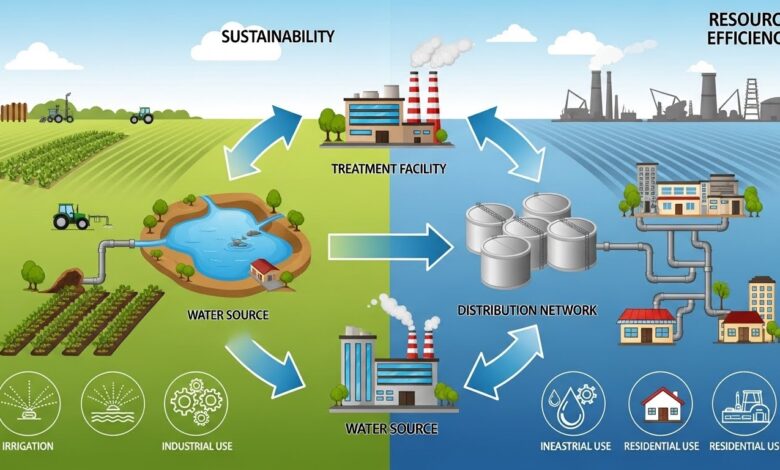
A closed loop water system is designed to optimize water use by recirculating and reusing water within a specific system, rather than relying on external sources. This approach can significantly enhance sustainability, reduce waste, and improve efficiency in various applications, including agriculture, industrial processes, and building systems. In this guide, we’ll explore what a closed loop water system is, its benefits, key components, and applications.
What is a Closed Loop Water System?
In a closed loop water system, water is collected, used, and then treated and returned for further use within the same system. This differs from traditional systems, where water is consumed and not reused efficiently. Closed loop systems are commonly used in applications where water conservation is critical, helping to minimize environmental impact while maximizing resource efficiency.
Benefits of a Closed Loop Water System
- Water Conservation: Reduces the demand for fresh water by recycling and reusing water, thus conserving a vital resource.
- Cost Efficiency: Lower operational costs associated with water sourcing and treatment, as less water needs to be purchased or treated from external sources.
- Environmental Impact: Minimizes waste and pollution by reducing water discharge and lowering the consumption of natural water bodies.
- Better Quality Control: Allows for the monitoring and treatment of water quality before reuse, ensuring safer water for its intended applications.
- Energy Efficiency: Often leads to reduced energy consumption by lowering the costs associated with transporting and treating fresh water.
Key Components of a Closed Loop Water System
- Water Source: The initial source of water, which might come from rainwater, greywater, or reclaimed water.
- Treatment Systems: Facilities that treat and purify water to make it suitable for reuse. This can include filtration, disinfection, and chemical treatments.
- Storage Tanks: Tanks designed to store both used and treated water in a controlled environment until it’s ready for reuse.
- Distribution Network: Pipes and pumps that transport water to and from various points within the system, ensuring efficient circulation.
- Monitoring Systems: Sensors and controls that track water quality and system performance, allowing for necessary adjustments and maintenance.
Applications of Closed Loop Water Systems
- Industrial Processes: Many industries, such as textiles and food processing, use closed loop systems to recycle water used in production, leading to lower waste and higher efficiency.
- Agriculture: Closed loop irrigation systems optimize water usage by recirculating water while providing nutrients directly to plants, improving yield and reducing water waste.
- Building Systems: In commercial and residential buildings, closed loop systems manage water use, from HVAC systems to greywater recycling systems, for both efficiency and sustainability.
- Aquaculture: Fish farming often employs closed loop systems to maintain water quality and reduce the need for fresh water, enhancing fish health and growth.
- Cooling Systems: Closed loop cooling systems in power plants and large facilities recycle water used for cooling equipment, significantly reducing water consumption.
Conclusion
A closed loop water system presents a sustainable solution for managing water resources effectively. By recirculating and reusing water, these systems not only conserve precious resources but also reduce costs and environmental impacts. Whether in agriculture, industrial applications, or building systems, closed loop water systems are essential for promoting sustainability and efficiency in water use.